Tuesday, May 14, 2013

To Divest or Not to Divest. That is the (new) Question.

With apologies to William Shakespeare, investors are increasingly asking that question that should be never raised at cocktail parties : 

     "Should I invest in companies that I know are wrecking the planet?"

In simpler times, "serious investors" didn't worry with the social aspects of investing in tobacco or alcohol or defense contractors. Our pragmatism stated that legal products were acceptable investments in a free society.   

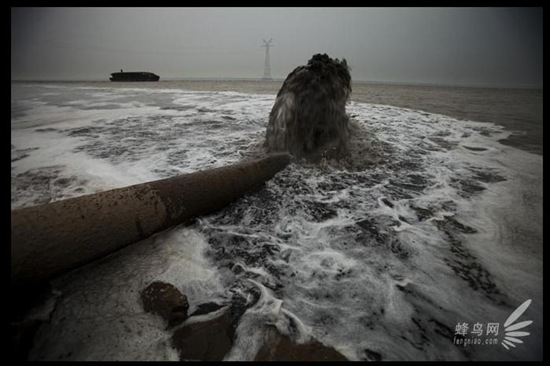
That was prior to our knowledge of climate science... before the flooding of Pacific islands and Alaskan coastal towns... and well in advance of breaching 400ppm of CO2 in the atmosphere -- a level not seen in the totality of human history...  That was before we learned that the publicly traded energy companies own enough of the stuff in the ground to literally cook the planet in its own juices.  

This one is harder to ignore. 

So, true to form, college students are leading the charge, as they did in the mid-1980's -- pressuring the big college endowments to divest from companies doing business with a regime that perpetuated the now infamous apartheid system of discrimination.  Their little stunt turned into shareholder resolutions and ultimately changed history. 

The kids are getting some traction again.  Ten US cities have pledged to divest their modest sums invested in fossil fuel companies. (The real test will be when their massive public employee pension plans are confronted with the same lobbying.)  Brown University's investment committee just recommended divestment from all coal companies. Other smaller schools have taken more aggressive steps toward full divestiture.  Individual investors are taking notice. 

Over the past few months, we at Boardwalk Capital have been struggling with this conundrum. Clearly, the current path is unsustainable.  But how would divestment impact performance? And would divestment have any real impact on these companies or the planet?  After all, these companies won't really feel the pain of our selling these shares. The real pressure would come from using less of their products. 

In the end, two arguments did sway our thinking: Risk and Reputation.

The risk element is real. Were climate/energy policies to change over time to ensure that most of these reserves remain in the ground, then upwards of 60 - 70% of these companies' market value would be impaired.  Since oil, gas and other energy firms account for about 15% of the world's stock market value, this could be a massive hit to savings, pension plans and other investment pools. This is serious "fiduciary duty" stuff, and boards would be wise to consider the issue. If nothing else, market investors may demand a discount to account for increasing regulatory risk (putting downward pressure on share prices.)

Reputation is another issue. Oil and gas companies have carefully cultivated their corporate reputations. Despite spills, disasters and explosions, they remain decent corporate citizens in the eyes of the public. Should divestiture programs take on an "apartheid" flavor, the valuations accorded to these firms could be decreased. "Rogue industry" status seldom carries a P/E premium. 

With these risks in mind, and the societal costs clearly before us, Boardwalk Capital undertook a research project to determine the performance impact of a zero fossil fuels portfolio. In this exercise, we proportionately increased other economically sensitive sectors to account  for the missing "beta". The results were surprising -- no performance penalty was evident and volatility was only modestly higher. 

So, investors then need to ask a different question: If past performance is similar, and certain specific risks are reduced, what's holding you back?

What do you think?  How should investors attack this monumental challenge?  

And what if there were a performance penalty? How much is "too much" to pay for a livable planet?

Finally! A 401k plan with social impact investments

401k plans are the yeomen of the investment world, doing hard work behind the scenes with little fanfare or notice. Of course, in some cases, these workhorses are neglected or are poorly utilized. Sparsely maintained and improperly allocated, their strength is wasted as they toil in silence. 

In the best circumstances, they are practically invisible, tax-deferred and dull wealth builders. No one gets excited about their 401k. Even the best mix of American Funds can hardly get the blood pumping...  Unless something is wrong, of course. 

And much is wrong...  Besides undersaving, low participation, misallocated money and excessive costs, many plan participants also get no advice whatsoever on what to do with their money.  And now, even what appeared to be right (the mutual funds themselves) appear to be wrong. 

Recently, plan participants have begun to  scrutinize the holdings of their 401k mutual funds. Finding them "loaded to the gills" with the likes of BP, Halliburton, Wal-Mart and Exxon-Mobil, they are requesting more " responsible" options for their retirement assets. Plan sponsors (the employers) are finding decent performance among the SRI fund crowd and are increasingly including them in their plans. And so, the path is being paved for sustainable 401k's to accompany the newfound sustainability goals of corporate America. 

It's clear that investors increasingly care about the "footprint" of their investments. This is a big trend. In fact, JPMorgan believes that so-called "impact investments" (profit seeking enterprises, but with a positive social benefit) will eventually be a $1 trillion asset class. 
Unfortunately, "social impact" funds have been off limits to retirement plans. Their long term, illiquid nature and short track records frankly make them unsuitable for investment plans that need a high degree of credibility. 

But what if investors could have the same "sustainable" mutual funds in their 401k's and participate in social impact partnerships?  Would this be the best of both worlds?

Boardwalk Capital, the South's only Certified B Corporation investment advisor, has designed a 401k program that includes a suite of both sustainable and conventional funds while simultaneously creating a "social impact charitable foundation" to invest in impact partnerships. The foundation is funded with 20% of the firm's profits, allowing the firm's clients to participate in the "impact" aspect of these investments without putting capital at risk. 

All plan participants are regularly informed of the foundation's investments and their social impact. They even get to weigh in on the selection of the specific investments. Yet their fees are no higher than those of conventional plans. 

Revolutionary?  Maybe. 

Inspiring? We hope so. 

Fun?  Darned right!

Saturday, July 7, 2012

One of the Best Steve Jobs Stories: Gorilla Glass

This excerpt from Jonathan Koomey's new book "Cold Cash, Cool Climate: Science-based Advice for Ecological Entrepreneurs" courtesy of CSRWire.com

Inventing the Future:  There are many examples of the power of this technique, but one of my favorites is in the recently released biography of the late Steve Jobs.

In the 1960s, Corning Glass had developed a very durable type of glass they called "gorilla glass", because it was so tough. They had stopped making it, but in 2005 the CEO of Corning (Wendell Weeks) explained the material to Jobs, who immediately wanted to use gorilla glass for the first iPhone.

"[Jobs] said he wanted as much gorilla glass as Corning could make within six months.'We don't have the capacity,' Weeks replied. 'None of our plants make the glass now.'

'Don't be afraid,' Jobs replied.

Friday, July 6, 2012

Investing for Foundations: Mission or Purpose

This article is excerpted from http://www.boardwalkcm.com.
B. Scott Sadler, CFA -- President, Boardwalk Capital Management

Charitable organizations are in a unique position among investment entities; being able to enhance the public good though grants that are consistent with their charitable "mission". And while a foundation's mission is often narrowly defined (arts, health, environment, education, etc.), the purpose of every foundation is arguably the same:

 "A charitable purpose... is for the public benefit."
                                                           C
harity Commission Website 2011)


With this broader definition, how does a foundation's purpose factor in to its investment decisions? There are bigger issues at work here than many recognize.

Never have foundations had more choices when it comes to investments that provide societal benefit. Even choosing between two large cap companies in the same industry can have vastly different environmental and social impacts. So, where does an "investment" end and a "grant" begin?

Better yet, why must one even choose to define such a question at all, when both can further the organization's purpose and mission?


"Harmonizing a charity's giving and financial investing best serves the charity's public benefit purpose.  

Separating the two poses a false dichotomy.

As investing and giving become more seamless, value is added."

Stephen Viederman, former president of the Jessie Smith Noyes Foundation


Friday, June 29, 2012

Climate Action May Impact Dividend Growth

B. Scott Sadler, CFA -- President, Boardwalk Capital Management

Out-of-control firestorms in Colorado and 100-degree heat index in the nation's capital served as an apt backdrop for an important court ruling on climate risk... And an important marker for investors that their world is changing in ways they may not yet understand.

Earlier this week, the U.S. Court of Appeals for the District of Columbia found that the EPA's interpretation of the Clean Air Act to regulate carbon dioxide regulations is "unambiguously correct." The three-judge panel unanimously agreed with the Environmental Protection Agency's finding that carbon dioxide is a public danger.

According to David Doniger of the Natural Resources Defense Council, "These rulings clear the way for EPA to keep moving forward under the Clean Air Act to limit carbon pollution from motor vehicles, new power plants, and other big industrial sources."

Wednesday, June 27, 2012

Three Characteristics of Responsible Corporate Citizens

This post authored by Daniel Baylis, Director of Content for N/A (the actual name). It appears courtesy of FastCompany.com.

To be "good" in the past meant a variety of things. Perhaps a company's product made people's lives easier. Or maybe they provided jobs in economically challenging times. But chances are the environmental effects of manufacturing were never considered, and overseas production was a financially intelligent decision free from ethical implications. Big businesses and marketing agencies were focused on selling the American Dream. Problematic environmental and social consequences hadn't yet come on the radar.

In the 1970s, a new marketing movement was born. It was called "cause marketing" and it matched for-profit businesses with charitable endeavors. Over the next few decades, the measure of doing good was how much your foundation gave to cancer, AIDS, dolphins, or any other topical issue. Cause marketing had its tangible benefits, but would prove to be trendy and lacking actual commitment.

Today there is an increased consumer value in supporting businesses that don't simply do well, but that do good. Cultural values are shifting, and this sea change is catalyzing corporations to revisit the choices they are making. And this will continue. But we are far from a world where corporations are making choices based upon the triple-bottom line: profits, people, and planet.


Tuesday, June 26, 2012

Managing the Unmeasurable -- Where are My Risks?

B. Scott Sadler, CFA -- President, Boardwalk Capital Management

Investors for decades have equated risk with volatility. But as we learned in the economic crisis of 2008-09, unseen and external factors can wreak havoc on portfolios. 


So, what do we investors do with our newfound concern over risk? 


If the past is any guide, we dutifully build our concern over those past risks into our portfolio thoughts and allocations (knowing full well that the past seldom repeats itself in exactly the same way...)

THAT is a recipe for failure.

So, what risks are we missing?  What actions should we be taking now to protect from those risks?

There is a new school of thought called Integrated Risk analysis that refuses to ignore risks just because we can't quantify them.


Take ecological risk:  We know that society is consuming more of the earth's resources than it can replenish.  Our activities are even inhibiting the planet's ability to produce at the earlier rate and same cost.  And we are painfully learning that the available quantities of potable water and arable land are insufficient to support the growth forecasts that underpin our valuations.

Something in this equation is incorrect -- either valuations or growth -- and as fiduciaries, we have a responsibility to manage this risk.

Tuesday, May 15, 2012

THIS is What "Serious About Sustainability" Looks Like

If you are a company who wants to do business with the big guys, you often to have do it their way. Today, that can mean doing business sustainably.  Large companies are held accountable for the impact of their suppliers.  So, those suppliers must play by the new rules of the game. 

In other words, it just got serious.

Microsoft Pledges Carbon NeutralityAs a sustainable investor, you may feel good knowing that your portfolio companies are moving the needle on environmental issues.  But have you considered the risk that your small cap investments may become increasingly uncompetitive if they can't meet these increasingly higher standards? 

There is a real risk that the measurement and documentation of these issues may render some firms "out of the loop" when it comes to earning the business of a Procter and Gamble or a Microsoft.

Friday, May 11, 2012

Water Stress: A World Wide Problem

Sustainable investors should be particularly concerned about how their portfolio holdings are addressing one of the most critical issues of our time:  Water.
 

Unsustainable water use is threatening agriculture, other business and populations in China, India and the US, according to a study by risk analysis company Maplecroft.  Companies who fail to manage this issue stand to lose sales, and even the right to operate in certain countries.

Sunday, April 29, 2012

Boardwalk Portfolios: Top Rankings for Ethics and Climate

Last month, global watchdog Ethisphere released its World's Most Ethical Companies list.  This month, research firm Maplecroft disclosed its Climate Innovation Index.  In both cases, Boardwalk's model portfolio holdings were well represented.

Among those considered most ethical, General Electric and Starbucks have made the grade for all six years of the study's existence. 

UPS, Cisco, Intel, Alcoa, and Pepsico were also among the domestic honorees in our models, while Accenture (Ireland), National Grid (UK) and Westpac Banking (Australia) were among the foreign holdings recognized.

The Carbon Innovation Index recognizes companies who "successfully innovate and manage climate-related opportunities and risks and are better equipped to operate in this future growth environment." Many of the same "ethical" companies are also making a serious effort to prepare for climate change.  Boardwalk holdings GE, Alcoa, Intel, Hess, Praxair and Ford are among the top ten ranked firms.

For more on the Boardwalk model portfolios click Global ESG Titans or ESG 50 USA.

Mounting Challenges for the World's Food Supply

With an expanding and increasingly urban, meat consuming world population, how will farming co-exist with climate change and water/energy/land scarcity?

Agriculture already consumes 70% of the world's water supply.  And by 2030, farmers will need 45% more water to feed the almost 9 billion people on the planet by then.  Where will it come from? 

Meanwhile, food production, and getting food to the consumer, both use vast amounts of energy.  And traditional energy sources aren't getting cheaper.  These inputs, and more volatile weather, are resulting in large fluctuations in food prices.  And as the author points out, this has often been associated with social unrest.

As a society, how will we deal with this issue?

There is much food for thought in the attached article from Environmental Leader.  Well worth a read.

Saturday, April 21, 2012

My Sustainability Talk with Corporate America

Earlier this month, I had the pleasure of addressing the Atlanta chapter of the National Investor Relations Institute (NIRI) on the subject of sustainability. Investor relations reps are a company's connection to its shareholders -- answering investor questions, providing information, etc. It is hardly glamorous work, but requires a great deal of effort, and knowledge, to do it well.

Increasingly, questions come to them from investors like Boardwalk, asking about emissions, water usage, diversity, etc.  And many IR representatives are doing a yeoman's job of trying to meet the disparate needs of the investor community. At the end of the day, however, if your company is doing little to address the core issues that bother your shareholders, there ain't much that a pretty face or articulate voice are going to do to fix that.

The good news is that many companies are doing much more, and are using "sustainability" to improve nearly every aspect of their business.

Sunday, March 25, 2012

Impact Investing: The Trillion Dollar Investment Opportunity

If you are familiar with Boardwalk Capital, then you know that our firm provides a different type of investment management. We focus on sustainable investing --building investment strategies from what may be called "exemplary corporate citizens". 

We think this is pretty important stuff, but to be honest, it's usually just part of the story. To create a full sustainable portfolio, however, one must bring in other asset types such as bonds, commodities, and an array of "specialty" investments -- all with an overarching theme of responsible and profitable investing.

Within the catch-all "specialty" category listed above, one finds what are now called Impact Investments. These are often truly unique enterprises -- companies organized to meet a societal need -- and turn a profit while doing so.

This new and remarkable business model was described by JPMorgan as the next big asset class.  They called it A One Trillion Dollar Investment Opportunity.

Thursday, March 22, 2012

Why the World's Largest Investors are Embracing Sustainable and Responsible Investing

Pension plans, college endowments and charitable organizations are some of the largest and most astute investors in the world. As individuals, should we take lessons from their actions?

In recent years, institutions who manage trillions of dollars have begun to take a new approach to investing. They have determined that resource scarcity, climate change, activist consumers and even the speed of social media have changed the investment landscape.

Company reputations are damaged in an instant, and billions of dollars can be wiped away by reckless actions. These institutional investors are increasingly employing a "Sustainable and Responsible Investment" model to help them manage this array of new risks, while positioning themselves to pursue additional opportunities...

Read more


Thursday, March 15, 2012

Companies are Climate Change Believers (even when politicians are not)

Without question, some companies stand to be harmed by climate change. Yet there are many firms who could benefit and are already seizing new opportunities.

Others worry of being impacted by a raft of regulatory changes that seem increasingly likely -- and are lobbying furiously to delay or derail these efforts.

While the impacts will surely vary, no company will be untouched by this issue that sustainable investors increasingly study...


Monday, March 5, 2012

US Buildings need $280bn investment in energy efficiency -- for a $1 trillion return

Buildings account for nearly half of US energy consumption, consume 3/4 of the electricity and, excluding residential, are responsible for more than 45 percent of carbon emissions. The EPA suggests that some 30% of this energy is wasted. 

New research from the Rockefeller Foundation and Deutsche Bank reveals that such inefficiency creates a mammoth investment opportunity --  $279bn investment is needed, and the payback in energy efficiency could yield more than $1 trillion in cost savings over the next decade.  Such a surge of activity stands to employ millions of workers, substantially reduce carbon emissions and provide investors with a handsome return on investment.

Tuesday, February 28, 2012

Intel Takes Green Mindedness to the Bank

One never knows where they will find evidence of good corporate citizenship, operational excellence and environmental stewardship.  This time, it's the lawyers...

Law.com/Corporate Counsel magazine recently interviewed several corporate attorneys at Intel, revealing much about the depth and breadth of the sustainability programs at the world's largest manufacturer of semiconductor chips.

Friday, February 24, 2012

Lighting Retrofits: Low Hanging Fruit

For some time now, we have been hearing a politically-charged and nonsensical debate in Washington over new standards for light bulb efficiency.  These standards while new, completely follow past precident to advance the industry and improve efficiency while giving manufacturers clarity from which to make investment decisions.

Less interesting to many, but more impactful to companies and to society, are the efficiency gains that are being realized every day through lighting retrofits.  The cost savings are often staggering.

Friday, February 17, 2012

15 Companies Tell Congress To Renew Key Wind Power Tax Credit

In a recent letter to Congress, fifteen of the country's largest consumers of alternative energy, including Starbucks, Yahoo! and Campbell's Soup, voiced their support for renewing the Production Tax Credit, (PTC) set to expire in December 2012.

The letter states that the "PTC has enabled the industry to slash wind energy costs by some 90% since 1980..." 

Vanguard's John Bogle -- At It Again... "A Tax Break for Gambling?"

John Bogle, the esteemed founder of the Vanguard Group, has probably done more to save investors money than any individual on the planet.  So when he advocates raising taxes, folks tend to notice.

His core philosophy has always been at odds with the investment management industry -- identifying that most active managers fail to beat their benchmarks, net of fees. His relentless pressure on the industry to lower fees has not made him many friends, so his most recent remarks should come as no surprise.