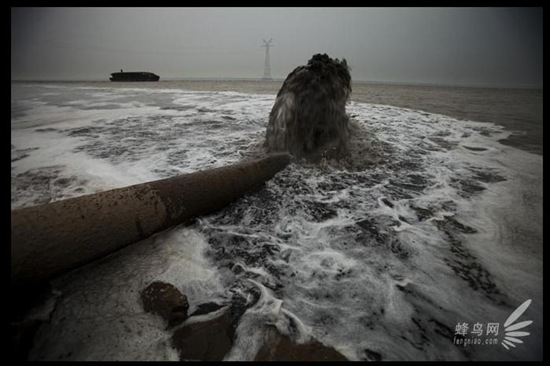
This excerpt from Jonathan Koomey's new book "Cold Cash, Cool Climate:
Science-based Advice for Ecological Entrepreneurs" courtesy of
CSRWire.com
Inventing the Future: There are many examples of the power of this technique, but one of my
favorites is in the recently released biography of the late Steve Jobs.
In the 1960s, Corning Glass had developed a very durable type of glass they
called "gorilla glass", because it was so tough. They had stopped making it, but
in 2005 the CEO of Corning (Wendell Weeks) explained the material to Jobs, who
immediately wanted to use gorilla glass for the first iPhone.
"[Jobs] said he wanted as much gorilla glass as Corning could make within six
months.'We don't have the capacity,' Weeks replied. 'None of our plants make the
glass now.'
'Don't be afraid,' Jobs replied.
The Sustainable Investor is a blog produced by Boardwalk Capital Management -- in pursuit of an enlightened investment portfolio.
Saturday, July 7, 2012
Friday, July 6, 2012
Investing for Foundations: Mission or Purpose
This article is excerpted from http://www.boardwalkcm.com.
B. Scott Sadler, CFA -- President, Boardwalk Capital Management
Charitable organizations are in a unique position among investment entities; being able to enhance the public good though grants that are consistent with their charitable "mission". And while a foundation's mission is often narrowly defined (arts, health, environment, education, etc.), the purpose of every foundation is arguably the same:

With this broader definition, how does a foundation's purpose factor in to its investment decisions? There are bigger issues at work here than many recognize.
Never have foundations had more choices when it comes to investments that provide societal benefit. Even choosing between two large cap companies in the same industry can have vastly different environmental and social impacts. So, where does an "investment" end and a "grant" begin?
Better yet, why must one even choose to define such a question at all, when both can further the organization's purpose and mission?
B. Scott Sadler, CFA -- President, Boardwalk Capital Management
Charitable organizations are in a unique position among investment entities; being able to enhance the public good though grants that are consistent with their charitable "mission". And while a foundation's mission is often narrowly defined (arts, health, environment, education, etc.), the purpose of every foundation is arguably the same:
| "A
charitable purpose... is for the public benefit." Charity Commission Website 2011) |

With this broader definition, how does a foundation's purpose factor in to its investment decisions? There are bigger issues at work here than many recognize.
Never have foundations had more choices when it comes to investments that provide societal benefit. Even choosing between two large cap companies in the same industry can have vastly different environmental and social impacts. So, where does an "investment" end and a "grant" begin?
Better yet, why must one even choose to define such a question at all, when both can further the organization's purpose and mission?
"Harmonizing a charity's giving and financial investing best serves the charity's public benefit purpose. Separating the two poses a false dichotomy. As investing and giving become more seamless, value is added."
Stephen Viederman, former president of the Jessie Smith
Noyes Foundation
|
Friday, June 29, 2012
Climate Action May Impact Dividend Growth
B. Scott Sadler, CFA -- President, Boardwalk Capital Management
Out-of-control firestorms in Colorado and 100-degree heat index in the nation's capital served as an apt backdrop for an important court ruling on climate risk... And an important marker for investors that their world is changing in ways they may not yet understand.
Earlier this week, the U.S. Court of Appeals for the District of Columbia found that the EPA's interpretation of the Clean Air Act to regulate carbon dioxide regulations is "unambiguously correct." The three-judge panel unanimously agreed with the Environmental Protection Agency's finding that carbon dioxide is a public danger.
According to David Doniger of the Natural Resources Defense Council, "These rulings clear the way for EPA to keep moving forward under the Clean Air Act to limit carbon pollution from motor vehicles, new power plants, and other big industrial sources."
Out-of-control firestorms in Colorado and 100-degree heat index in the nation's capital served as an apt backdrop for an important court ruling on climate risk... And an important marker for investors that their world is changing in ways they may not yet understand.

Earlier this week, the U.S. Court of Appeals for the District of Columbia found that the EPA's interpretation of the Clean Air Act to regulate carbon dioxide regulations is "unambiguously correct." The three-judge panel unanimously agreed with the Environmental Protection Agency's finding that carbon dioxide is a public danger.
According to David Doniger of the Natural Resources Defense Council, "These rulings clear the way for EPA to keep moving forward under the Clean Air Act to limit carbon pollution from motor vehicles, new power plants, and other big industrial sources."
Wednesday, June 27, 2012
Three Characteristics of Responsible Corporate Citizens
This post authored by Daniel Baylis, Director
of Content for N/A (the actual name). It appears courtesy of FastCompany.com.
To be "good" in the past meant a variety of things. Perhaps a company's product made people's lives easier. Or maybe they provided jobs in economically challenging times. But chances are the environmental effects of manufacturing were never considered, and overseas production was a financially intelligent decision free from ethical implications. Big businesses and marketing agencies were focused on selling the American Dream. Problematic environmental and social consequences hadn't yet come on the radar.
In the 1970s, a new marketing movement was born. It was called "cause marketing" and it matched for-profit businesses with charitable endeavors. Over the next few decades, the measure of doing good was how much your foundation gave to cancer, AIDS, dolphins, or any other topical issue. Cause marketing had its tangible benefits, but would prove to be trendy and lacking actual commitment.
Today there is an increased consumer value in supporting businesses that don't simply do well, but that do good. Cultural values are shifting, and this sea change is catalyzing corporations to revisit the choices they are making. And this will continue. But we are far from a world where corporations are making choices based upon the triple-bottom line: profits, people, and planet.
To be "good" in the past meant a variety of things. Perhaps a company's product made people's lives easier. Or maybe they provided jobs in economically challenging times. But chances are the environmental effects of manufacturing were never considered, and overseas production was a financially intelligent decision free from ethical implications. Big businesses and marketing agencies were focused on selling the American Dream. Problematic environmental and social consequences hadn't yet come on the radar.
In the 1970s, a new marketing movement was born. It was called "cause marketing" and it matched for-profit businesses with charitable endeavors. Over the next few decades, the measure of doing good was how much your foundation gave to cancer, AIDS, dolphins, or any other topical issue. Cause marketing had its tangible benefits, but would prove to be trendy and lacking actual commitment.
Today there is an increased consumer value in supporting businesses that don't simply do well, but that do good. Cultural values are shifting, and this sea change is catalyzing corporations to revisit the choices they are making. And this will continue. But we are far from a world where corporations are making choices based upon the triple-bottom line: profits, people, and planet.
Tuesday, June 26, 2012
Managing the Unmeasurable -- Where are My Risks?
B. Scott Sadler, CFA -- President, Boardwalk Capital Management
Investors for decades have equated risk with volatility. But as we learned in the economic crisis of 2008-09, unseen and external factors can wreak havoc on portfolios.
So, what do we investors do with our newfound concern over risk?
If the past is any guide, we dutifully build our concern over those past risks into our portfolio thoughts and allocations (knowing full well that the past seldom repeats itself in exactly the same way...)
THAT is a recipe for failure.
So, what risks are we missing? What actions should we be taking now to protect from those risks?
There is a new school of thought called Integrated Risk analysis that refuses to ignore risks just because we can't quantify them.
Take ecological risk: We know that society is consuming more of the earth's resources than it can replenish. Our activities are even inhibiting the planet's ability to produce at the earlier rate and same cost. And we are painfully learning that the available quantities of potable water and arable land are insufficient to support the growth forecasts that underpin our valuations.
Something in this equation is incorrect -- either valuations or growth -- and as fiduciaries, we have a responsibility to manage this risk.
Investors for decades have equated risk with volatility. But as we learned in the economic crisis of 2008-09, unseen and external factors can wreak havoc on portfolios.

So, what do we investors do with our newfound concern over risk?
If the past is any guide, we dutifully build our concern over those past risks into our portfolio thoughts and allocations (knowing full well that the past seldom repeats itself in exactly the same way...)
THAT is a recipe for failure.
So, what risks are we missing? What actions should we be taking now to protect from those risks?
There is a new school of thought called Integrated Risk analysis that refuses to ignore risks just because we can't quantify them.
Take ecological risk: We know that society is consuming more of the earth's resources than it can replenish. Our activities are even inhibiting the planet's ability to produce at the earlier rate and same cost. And we are painfully learning that the available quantities of potable water and arable land are insufficient to support the growth forecasts that underpin our valuations.
Something in this equation is incorrect -- either valuations or growth -- and as fiduciaries, we have a responsibility to manage this risk.
Tuesday, May 15, 2012
THIS is What "Serious About Sustainability" Looks Like
If you are a company who wants to do business with the big guys, you often to have do it their way. Today, that can mean doing business sustainably. Large companies are held accountable for the impact of their suppliers. So, those suppliers must play by the new rules of the game.
In other words, it just got serious.
As a sustainable investor, you may feel good knowing that your portfolio companies are moving the needle on environmental issues. But have you considered the risk that your small cap investments may become increasingly uncompetitive if they can't meet these increasingly higher standards?
There is a real risk that the measurement and documentation of these issues may render some firms "out of the loop" when it comes to earning the business of a Procter and Gamble or a Microsoft.
In other words, it just got serious.
There is a real risk that the measurement and documentation of these issues may render some firms "out of the loop" when it comes to earning the business of a Procter and Gamble or a Microsoft.
Friday, May 11, 2012
Water Stress: A World Wide Problem
Sustainable investors should be particularly concerned about how their portfolio holdings are addressing one of the most critical issues of our time: Water.
Unsustainable water use is threatening agriculture, other business and populations in China, India and the US, according to a study by risk analysis company Maplecroft. Companies who fail to manage this issue stand to lose sales, and even the right to operate in certain countries.
Subscribe to:
Posts (Atom)